Velotric Triker
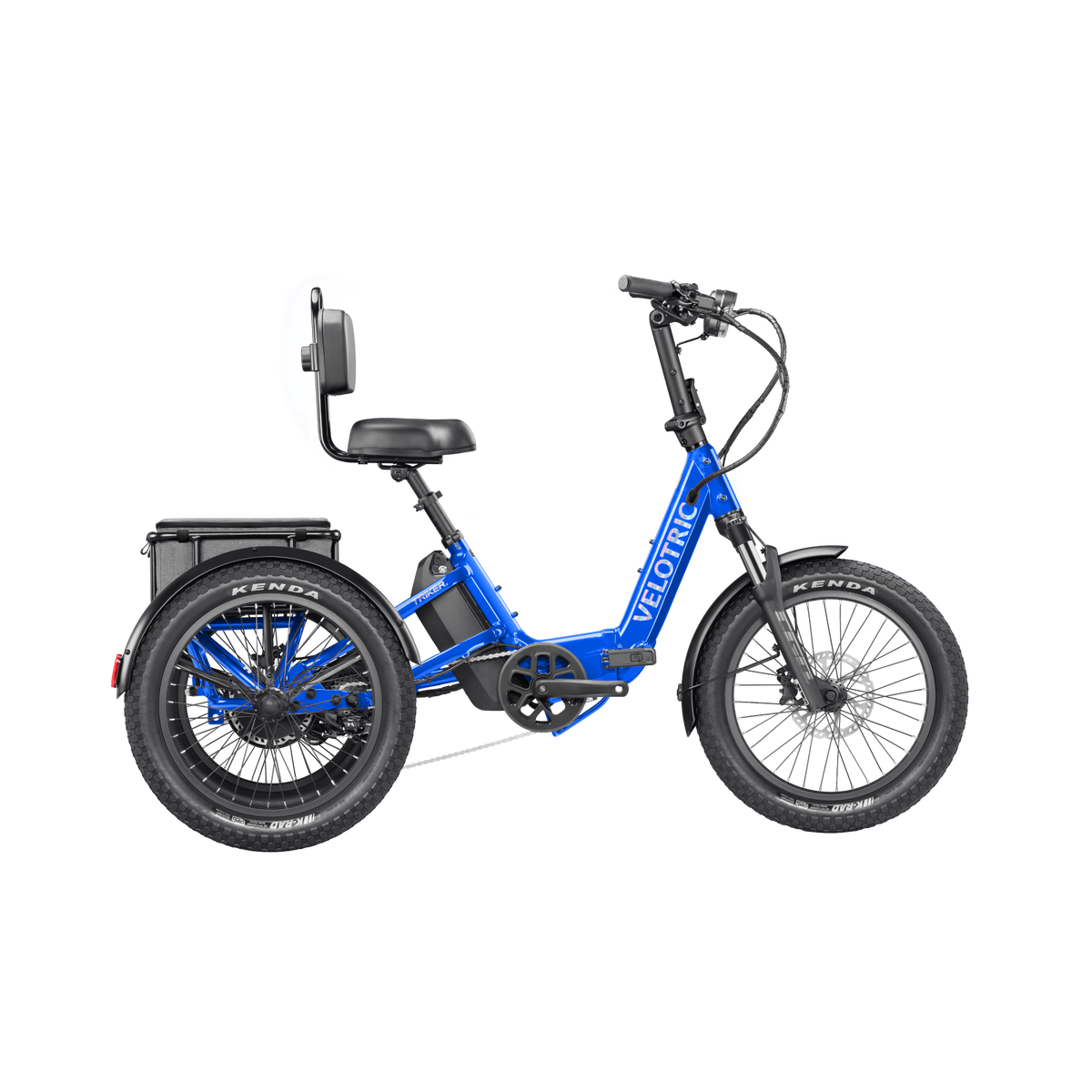
Velotric Triker
Where it wins
- Three-wheel stability, no balancing
- Step-through frame, easy mount
- Large rear cargo basket
Where it doesn't
- Wider than a bike - check doorways
- Corners need practice at speed
The Velotric Triker is a serious attempt to drag the adult electric trike category upmarket: a 750W motor with 1,300W peak output, an 804Wh UL-certified battery, hydraulic disc brakes, and a seat that adjusts in nearly every direction, all around $2,399. On paper it out-specs the budget trikes that dominate this market by a wide margin. The catch is the flip side of every trike: at roughly 98 lbs it is a garage-and-ramp vehicle, not something you’ll casually lift into a trunk.
Who it’s for
The Triker is built for riders who want the confidence of three wheels: seniors returning to cycling, people with balance or hip issues, riders recovering from injury, and anyone who wants to carry real cargo — groceries, tools, a dog — without balancing it on a two-wheeler. The 500 lb payload rating and 120 lb rear rack make it a practical errand vehicle. The huge fit range (about 4’10” to 6’5″, thanks to a dual-telescoping seatpost with backrest) means one trike can serve two very differently sized people in a household.
It’s the wrong choice for riders who want speed or plan to ride narrow, crowned, or heavily sloped roads. Trikes handle differently from bikes — you steer through corners rather than lean — and the Triker’s default 12 mph cap (adjustable up to 20 mph) reflects that physics honestly.
Key specs
| Spec | Velotric Triker |
|---|---|
| Motor | 750W rear hub, 1,300W peak, 90 Nm torque |
| Battery | 48V, 16.75Ah (804Wh), UL 2271/2849 |
| Range | Up to 60 mi claimed; ~41 mi in an independent high-assist test |
| Speed / class | Class 1/2; 12 mph default, adjustable to 20 mph; 8 mph Beginner Mode |
| Brakes | Hydraulic disc, 180mm rotors, plus parking brake |
| Tires | Kenda 20×3.0″ puncture-resistant, front suspension fork (80mm) |
| Weight / payload | ~98 lbs / 500 lbs total, 120 lb rack |
| Fit | Riders ~4’10″–6’5″, step-thru frame, folding stem |
Living with it
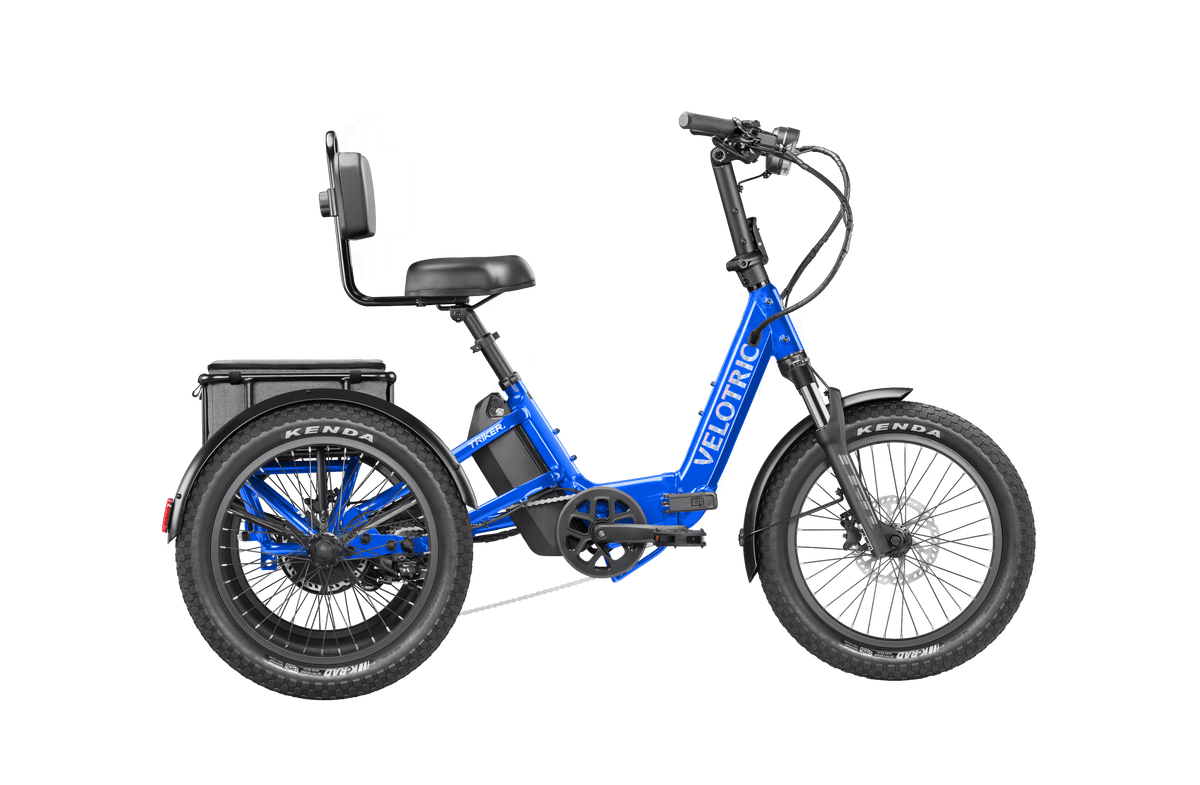
Storage and transport dominate the ownership experience. At around 98 lbs with a wide rear axle, the Triker will not fit standard bike racks; moving it requires a pickup or van plus a ramp, or simply keeping it where you ride. The stem folds flat, which shrinks its height for garage storage and helps it slide into a van, but this is fundamentally a vehicle you park, not one you transport. Measure your doorways and shed before ordering — rear axle width on trikes surprises people.
The day-to-day details are unusually well thought out for the category. The removable 10.8 lb battery charges indoors in about 5.5 hours on the included 3-amp charger. A parking brake keeps the trike from rolling while you load the rear basket (which comes with a zippered fabric liner). Auto-sensing lighting, turn signals, included mirrors, and full fenders mean there’s nothing essential left to buy. Apple Find My integration is genuinely useful on a vehicle that will usually be parked outside stores.
One practical note grounded in the spec sheet: there is no reverse gear. At nearly 100 lbs, backing the Triker out of a tight spot means pushing it by hand, so leave yourself pull-through parking where you can. New riders should also spend their first sessions in Beginner Mode (8 mph cap) in an empty lot — trike steering takes a day or two to feel natural if you’re coming from a bicycle.
Cost of ownership
Velotric’s 2-year warranty on electrical components — motor, battery, controller, display, lighting — is roughly double what budget trike brands typically offer, and the UL 2271/2849 certification matters for insurance and for charging indoors with peace of mind. A replacement battery, when the day comes, should run several hundred dollars (budget $400–$600); with a 500+ cycle expectation and typical trike usage of short local trips, that day is likely many years out.
Consumables are mild. The 12–20 mph operating envelope is gentle on brake pads and the 7-speed drivetrain, and the 20×3.0″ tires are a common, affordable size. The main thing to keep on top of is tire pressure — three wheels means one more tire to check, and underinflated rear tires on a loaded trike wear quickly and dull the handling.
How it compares
Within Velotric’s lineup, the comparison is really about mission. The Nomad 2X is for off-road riding and assumes good balance and an appetite for speed; the Breeze 1 is a light, easy-riding two-wheel cruiser for people who don’t need a third wheel. If you can comfortably ride a bicycle, the Breeze 1 delivers more range of use for $600 less. The Triker exists for when you can’t — or when cargo capacity and stability outrank everything else.
Against market rivals, the Lectric XP Trike costs around $1,500 and is the value king, but it uses a smaller battery, less power, and mechanical rather than hydraulic braking hardware in a lighter-duty package. The Rad Power RadTrike sits closer in price but with a smaller battery and lower top-end spec, though it does offer a reverse function the Triker lacks. The Triker’s case is straightforward: the biggest battery, strongest brakes, and most adjustable ergonomics in the mid-tier trike class — at a mid-tier price.
FAQ/h2>
How fast does the Velotric Triker go?
It ships with a conservative 12 mph default and can be adjusted up to 20 mph with pedal assist or throttle. A Beginner Mode caps speed at 8 mph with three assist levels — genuinely useful for the first week of trike ownership. On a three-wheeler, most riders settle happily in the 10–15 mph range, especially when cornering.
Is the Velotric Triker good for seniors?
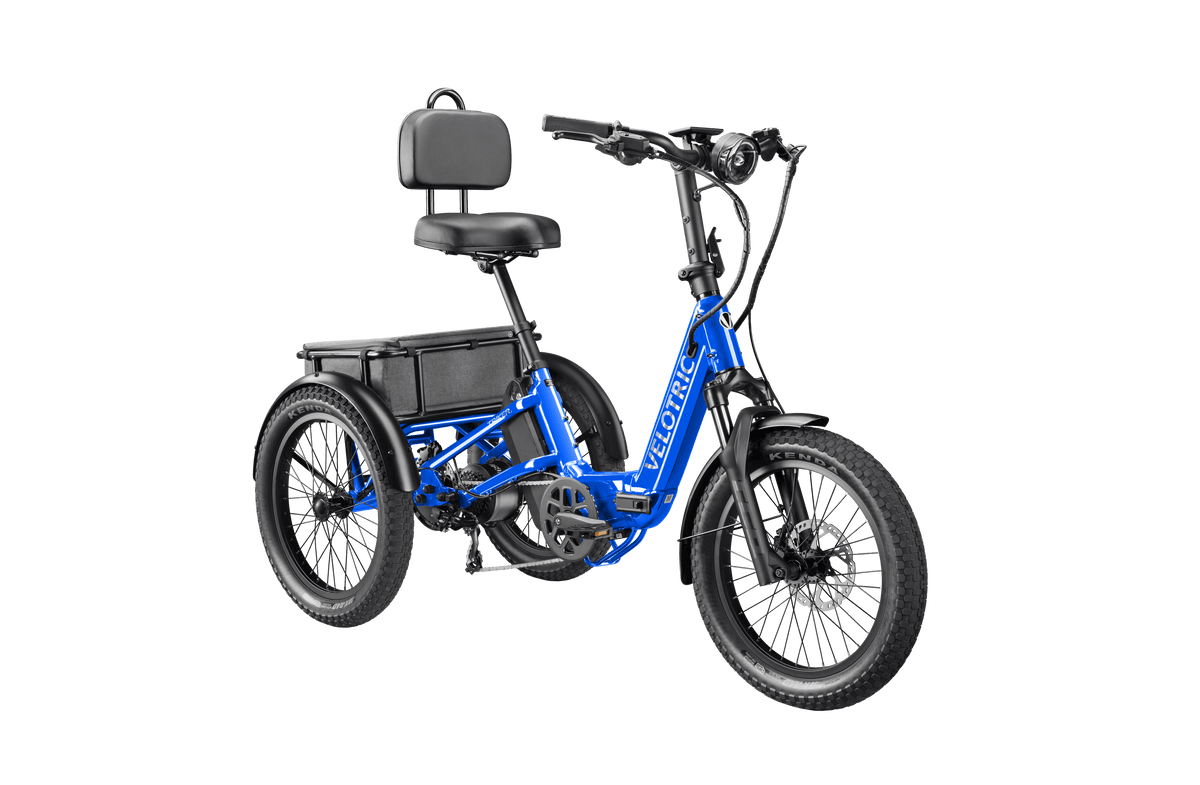
It’s aimed squarely at them: step-thru frame, no balancing required, a backrest saddle, upright riding position, parking brake, throttle for starts, and a low-speed beginner mode. The main cautions are its ~98 lb weight (plan storage accordingly) and the learning curve of trike steering if you’re used to a bicycle.
Can the Triker climb hills?
With 90 Nm of torque and a 1,300W peak motor, it has more climbing muscle than almost anything in the trike category. For a fully loaded setup — a 220 lb rider plus 100 lbs of cargo — the spec sheet suggests moderate hills are well within reach, though steep grades will drain the battery noticeably faster.
Bottom line
The Triker is the trike for people who found the budget options flimsy and the premium options overpriced. Buy it if stability, cargo hauling, and long-term support (UL certification, 2-year electrical warranty, big battery) are your priorities and you have ground-level storage. Skip it if you need to transport your trike regularly, want a reverse gear, or if $1,500-class trikes cover your shorter, lighter use — the extra $900 buys durability and refinement, not a different kind of vehicle. For a daily-errand machine that will be someone’s primary transportation, it’s one of the best-equipped choices on the US market.